


Non-CDL box trucking has exploded over the past few years as shippers seek faster, more flexible final-mile and regional capacity—and as entrepreneurs look for lower-barrier entry into transportation. In 2025, this segment remains one of the best entry points for new operators and a profitable expansion lane for established fleets.
Below is a practical guide to where the money is, how to avoid common pitfalls, and how Freight Index helps you turn a simple box truck into a real business.
Why Non-CDL Box Trucks Are Thriving
Lower barrier to entry. Most states allow operation of trucks 26,000 lbs. GVWR and under without a CDL, reducing training time and startup cost.
Shipper demand. E-commerce, retail replenishment, medical/healthcare, and B2B distribution rely on quick regional drops where 16–26 ft. units shine.
Urban access. Box trucks fit docks and city streets large tractors avoid—shorter dwell times, more turns per day.
Service flexibility. White-glove, inside delivery, assembly, reverse logistics, and scheduled routes are all strong fits.
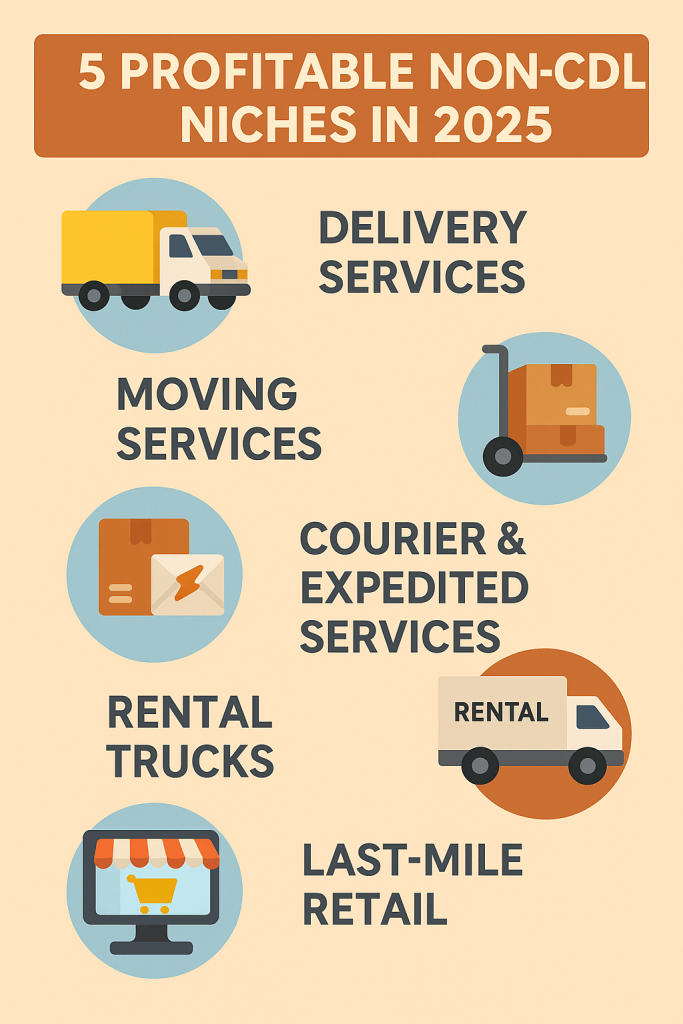
Where the Profits Are (2025 Niches)
- Final-Mile & Two-Man Delivery
Furniture, appliances, fitness equipment, and medical devices with time windows. Add white-glove/assembly for higher rates. - Contracted Route Work
Retail store replenishment, postal/parcel linehauls under CDL thresholds, bakery & food distribution, auto parts, and medical courier. - Event & Trade-Show Logistics
Time-critical, short-haul, high-touch moves with premium rates, especially in metro areas with convention centers. - Specialized Services
Liftgate + inside delivery, climate-sensitive relocations, high-value electronics with blanket-wrap and load bars. - Reverse Logistics / Returns
Growing e-commerce return flows create steady backhauls and recurring schedules.
Pricing & Margin Tips
- Bundle services (liftgate, inside, assembly, debris removal) and price each line item.
- Quote by stop + accessorials, not just by miles; city miles ≠ highway miles.
- Offer service tiers: Standard (dock to dock), Premium (liftgate + threshold), White-Glove (room-of-choice + assembly).
- Lock in fuel cards/discounts, and update your fuel surcharge weekly to protect margin.
- Target route density. The more clustered your stops, the better your dollars per hour.
Common Pitfalls to Avoid
- Under-insuring (cargo limits too low for furniture/electronics; no GL for inside delivery).
- No liftgate, no pads/straps—and losing white-glove opportunities.
- Saying yes to everything. Specialize first; expand once you have repeatable playbooks.
- Paper chaos. Missed PODs and service photos kill repeat work. Use simple apps to capture POD + photos + notes at the door.
Equipment & Setup Checklist
- Truck: 16–26 ft. box, liftgate, e-track, load bars, blankets/pads, pallet jack.
- Safety/Compliance: DOT number if required for your operation, medical card, annual inspections, maintenance log, reflective triangles, fire extinguisher.
- Protection: Auto liability, physical damage, cargo (match commodity values), general liability (for inside delivery/assembly).
- Workflow Apps: Routing/stop sequencing, ePOD with time-stamps & photos, customer messaging, simple invoicing.
- Branding: Clean truck, uniforms/IDs, email signature, and a verified directory profile to convert inbound leads.
How to Win Contracts (Repeatable Playbook)
- Dial in your niche. “We do inside delivery + assembly for home fitness and furniture” beats “we haul anything.”
- List and verify on Freight Index. Add photos of truck/equipment, service areas, response time, and accessorial capabilities.
- Publish SLAs. Appointment windows, two-man crew option, proof-of-delivery standards, claims response time.
- Collect reviews fast. Ask every satisfied shipper to leave a review on your profile—social proof closes the next deal.
- Pilot → Contract. Start with a 30-day pilot (KPIs below), then propose a 6–12-month route or volume agreement.
Suggested KPIs: On-time arrival %, successful first-attempt delivery %, NPS/CSAT, damage rate, average dwell minutes per stop, dollars/hour.
Operations That Scale
- Route density > raw volume. Add stops along existing lanes before you add new lanes.
- Train for two-man service. It unlocks premium categories—and your team can upsell assembly.
- Standardize photos & POD. Make it muscle memory at every stop; it reduces disputes and accelerates payment.
- Weekly margin review. Track revenue/stop, fuel %, labor %, and re-quote low-margin customers.
- Create backup capacity. On-call subs for spikes keep you reliable without buying extra trucks too early.
Why Use Freight Index for Non-CDL Work?
- Be discovered (not ignored). Carriers, retailers, and brokers search by category + region to find box-truck pros.
- Verified badge = trust. Shippers choose vetted partners first.
- Lead routing built for services. Your listing highlights liftgate, two-man, assembly, and coverage map—so the right requests hit your inbox.
- Reviews amplify wins. Great service surfaces you to the top of category searches.
