Winter is unforgiving on trucks, drivers, and timelines. Ice, wind, and sub-freezing temps can turn simple routes into costly delays. This Winter Ops Playbook gives carriers, owner-operators, and service providers a practical checklist to keep loads on time, equipment protected, and customers confident.
Why Winter Demands a Different Plan
- Higher failure risk: Batteries, DEF systems, tires, and air lines fail more in the cold.
- Longer cycle times: Slower speeds and tight parking increase dwell and detention.
- Customer sensitivity: Seasonal retail and healthcare loads have zero tolerance for misses.
Mindset: Protect people first, then equipment, then timeline—in that order.
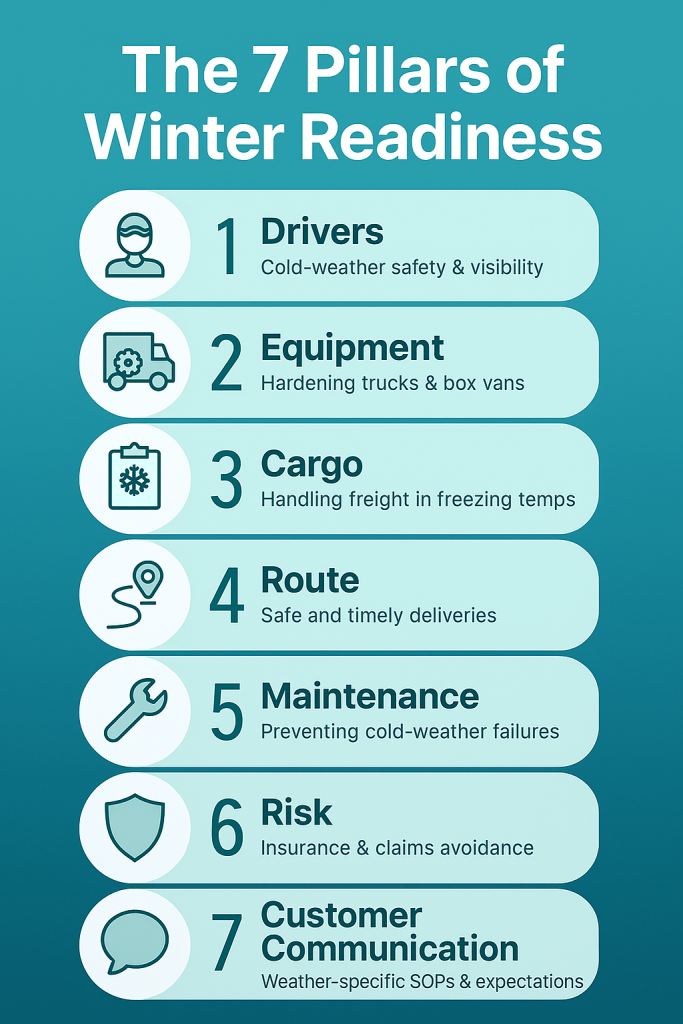
1) Driver Readiness & Safety
- Cold-weather kit: Insulated gloves, headlamp, traction aids, thermal layers, hand warmers, extra water/food, blanket.
- Visibility SOP: Require pre-trip ice/snow removal (mirrors, sensors, steps, lights, cameras).
- Speed & spacing: Set a winter max (e.g., 60–62 mph) and enforce increased following distance.
- Route go/no-go: Give drivers authority to pause when conditions cross your risk threshold; back them publicly with customers.
Coaching micro-goals: Fewer harsh events, lower idle %, gentle throttle/brake on slick surfaces.
2) Equipment Hardening (Box Trucks & Tractors)
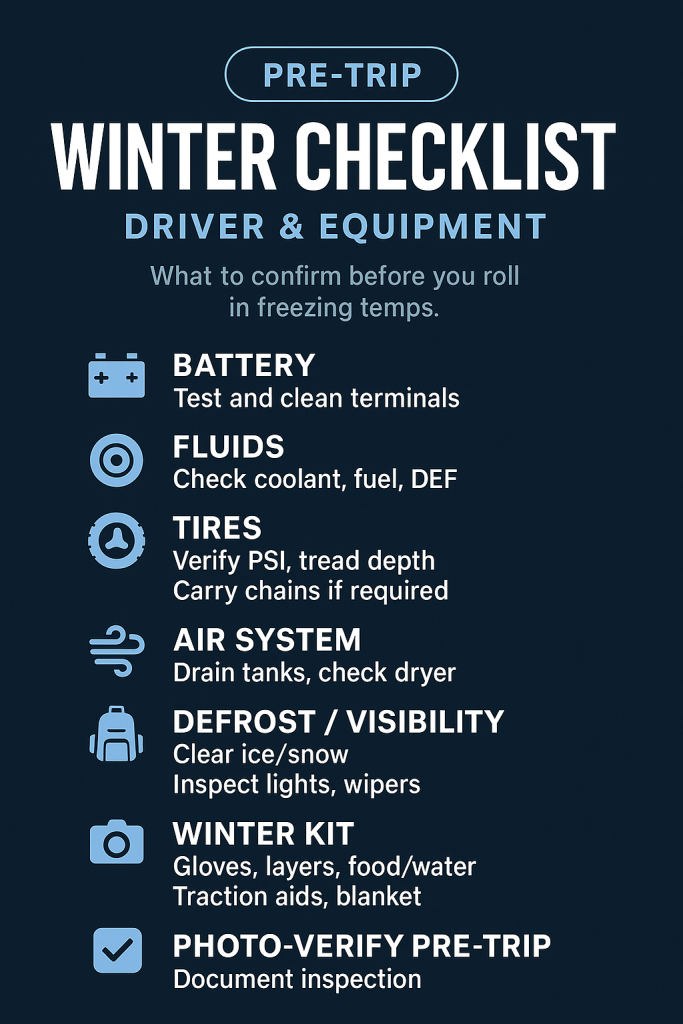
- Electrical: Test/load-test batteries; clean terminals; carry jump pack.
- Fluids: Correct coolant mix; winter-blend fuel or anti-gel; DEF kept above freezing; washer fluid rated for sub-zero.
- Air & brakes: Drain air tanks daily to prevent freeze; verify dryers; check gladhands and seals.
- Tires: Verify winter-rated tread depth; set PSI for temps; keep chains where required.
- Doors & seals: Lube handles/hinges; keep de-icer on board; check box/roll-up seals for drafts.
- Liftgate: Inspect hydraulics; clean/lube pins; protect controls from slush intrusion.
Photo-verify each item in your ePOD app during pre-trip—proof beats debates.
3) Cargo Protection & Handling
- Temperature-sensitive freight: Use insulated blankets; limit door-open time; pre-heat cargo area as needed.
- Moisture control: Keep mats/pads dry; carry spare moving blankets; bag electronics.
- White-glove jobs: Boot covers and floor protection prevent claims and callbacks.
SOP: Add a “winter accessorials” line item (snow removal, stair carry, waiting time) so service risks are priced—not absorbed.
4) Route & Time Management
- Winter routing rules: Prefer treated main corridors, avoid high-grade shortcuts, plan fuel early (don’t run <¼ tank).
- Buffers: Add 10–20% time buffer to urban routes; pre-approve detention extensions with customers.
- Parking: Identify safe parking before last mile; avoid unplowed lots that strand liftgates and vans.
- Comms cadence: Proactive ETAs at dispatch, rolling updates on weather slowdowns, and “proof of conditions” photos for customers.
5) Maintenance Rhythm (Prevent > Repair)
- Weekly winter PM: Batteries, belts, hoses, leaks, tire PSI, wiper blades, lights, door tracks.
- Daily in storms: Air-tank drain, salt wash (frame/brake components), liftgate cycle test.
- DEF & emissions: Keep DEF from freezing; watch for derates; handle codes quickly—deferred issues snowball.
Measure: Track road-call rate, preventable breakdowns, and “late due to equipment” incidents weekly.
6) Insurance & Risk
- Policy check: Verify winter coverage (towing, on-site repair, rental).
- Claims prevention: Photos before/after delivery, especially high-value and inside-delivery freight.
- Subcontractors: Require proof of insurance and winter SOP acknowledgment.
7) Customer Playbook (Set Expectations = Fewer Issues)
- Winter SLA addendum: Spell out weather exceptions, photo proof, and communication windows.
- Priority tiers: Red (medical/critical), Amber (retail just-in-time), Green (flex). Align resources accordingly.
- Review cadence: End-of-storm debrief—what slipped, root cause, and fix before next front.
KPIs to Watch December–February
- On-time delivery % (storm vs clear-day baseline)
- “Late due to weather” vs “late due to planning”
- Road-calls per 10,000 miles
- Damage rate on temperature-sensitive SKUs
- Average dwell and detention billed vs absorbed
Freight Index Advantage in Winter
- Verified mechanics & mobile techs near your lanes for fast saves.
- Fuel partners with strong winter network pricing and anti-gel guidance.
- White-glove crews verified for two-man, inside delivery, and assembly in bad weather windows.
👉 List or verify your company on Freight Index so shippers can find reliable winter-ready partners fast.
CTA
Make winter a competitive edge. Publish your Winter Ops SOP, add your coverage map and accessorials, and get Freight Index Verified so the right customers find you first.